
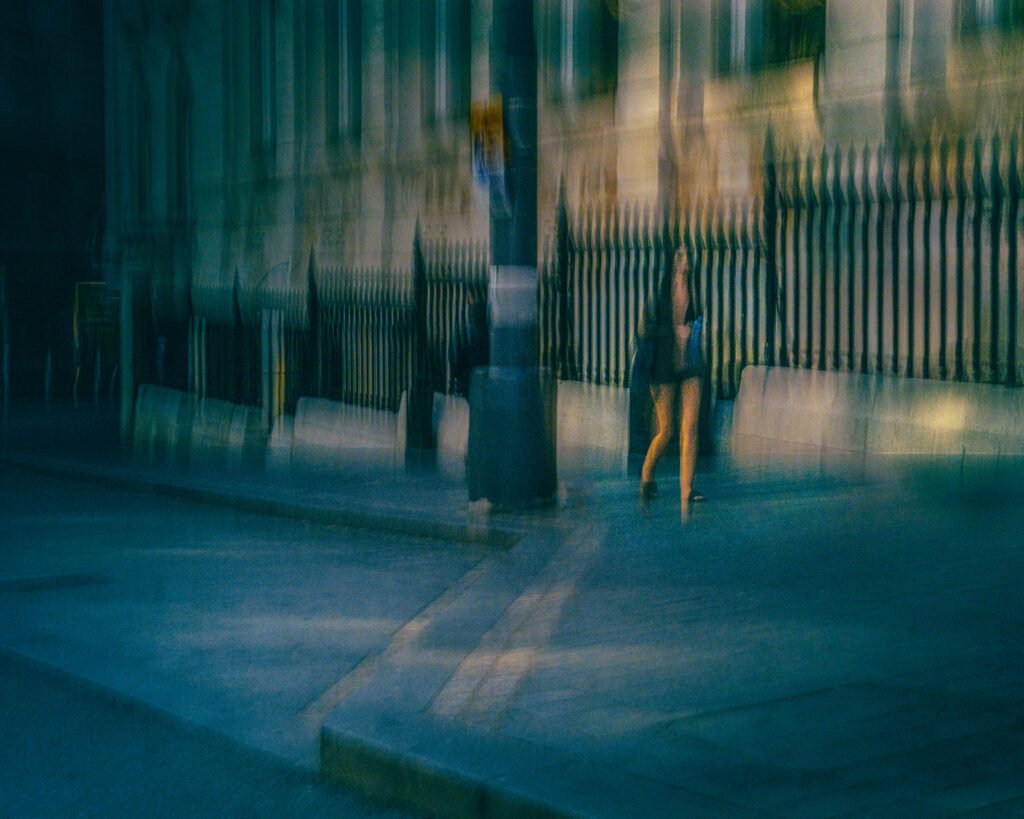
tICM (Intentional Camera Movement) is a creative photographic technique where the photographer deliberately moves the camera during exposure.
Instead of aiming for sharp detail and precision, the goal is to capture shape, colour and emotion through motion blur.
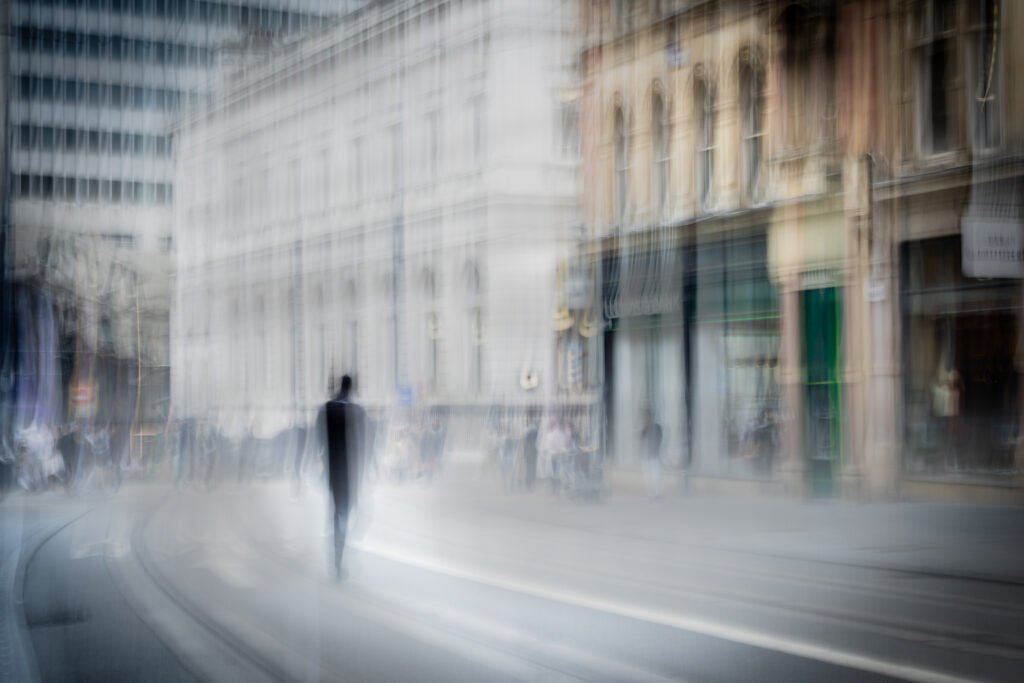
The technique transforms static scenes into painterly images — often resembling impressionist art — with a sense of rhythm, dreaminess, and abstraction rarely found in conventional photography.
Is ICM Photography Classed as Fine Art?
Yes, ICM is widely regarded as a form of fine art photography.
It focuses on creative expression rather than technical accuracy. While it still uses subjects from real life — trees, landscapes, buildings or people — the artistic intent is to evoke mood rather than document reality.
Fine art photography values interpretation, style, and vision, which makes ICM perfectly aligned with this genre.
Many contemporary galleries now exhibit ICM works alongside abstract and conceptual photography.
Is ICM Photography Popular and Why?
The Rise of Expression Over Perfection
ICM has grown rapidly in popularity over the last decade, partly because it provides a refreshing antidote to the over‑edited precision that dominates modern digital photography.
Photographers and hobbyists are attracted to it because:
- It allows for spontaneous creativity.
- It breaks away from pixel‑perfect technical constraints.
- It encourages personal interpretation over competition.
Social media platforms like Instagram and Flickr have also boosted interest, as ICM images naturally stand out in a sea of conventional shots.
According to the Royal Photographic Society (RPS), ICM workshops in the UK have increased significantly since 2020, particularly among landscape photographers.
Is ICM Photography Easy?
Technically Simple – Artistically Demanding
ICM is easy to start but difficult to master.
All you need is a camera capable of manual or semi‑manual settings, and the courage to deliberately move it while taking a photograph — something most beginners are told not to do.
What makes ICM easy:
- It requires no expensive equipment beyond a basic DSLR or mirrorless camera.
- It’s experimental — every result teaches you something new.
- There are no strict rules — “mistakes” often lead to interesting results.
What makes ICM challenging:
- It takes time to develop control over chaos.
- Mastering timing, rhythm and movement direction takes patience.
- Successful compositions often depend on instinct and practice, rather than technique alone.

Main Techniques Used in ICM Photography
1. The ‘Swipe’ Technique
Move the camera vertically or horizontally while pressing the shutter.
Ideal for landscapes or trees — creating clean lines and abstract streaks.
2. The ‘Twist’
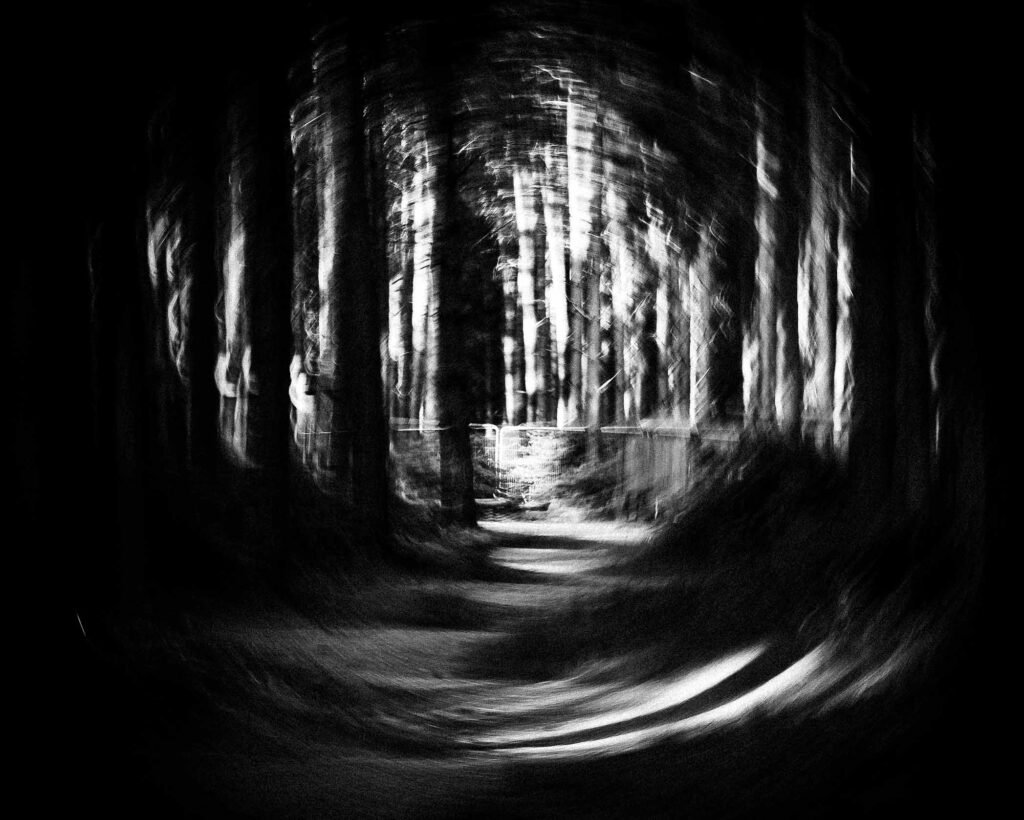
Rotate the camera (usually around the lens axis) during exposure.
Produces circular or spiral patterns, excellent for flowers or lights.
3. The ‘Zoom Burst’
Zoom the lens in or out during a long exposure.
Creates an energetic effect radiating from the subject’s centre.
4. The ‘Shake’ or ‘Jiggle’
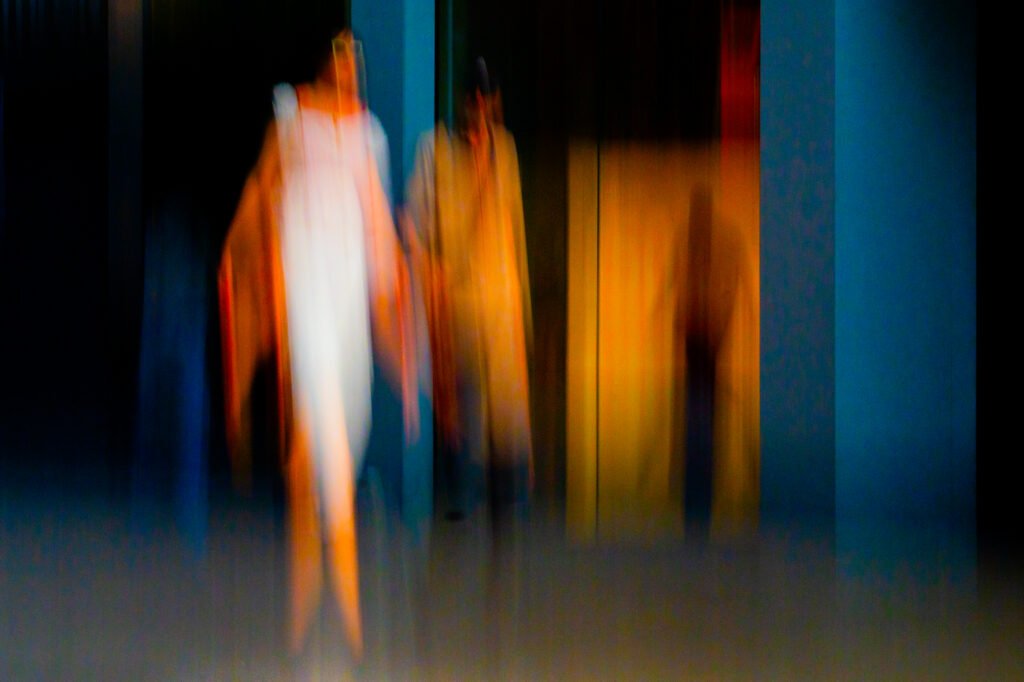
A quick, irregular movement — often handheld — giving a more spontaneous, kinetic look.
5. Combining Multiple Motions
Advanced ICM photographers often mix swipes, twists, or layered multiple exposures to achieve complex texture and depth akin to brushstrokes.
Camera Settings for Beginners
- Shutter Speed: ¼ – 2 seconds for handheld movement (longer if using tripod).
- Aperture: Between f/8 and f/16 to balance exposure.
- ISO: 100 – 200 to avoid overexposure during longer shutter openings.
- Movement: Experiment — smooth, fast or curved motions all produce different moods.
For those learning in the UK’s variable light, overcast days are perfect for slower shutter speeds without over‑bright exposures.
Can I Learn ICM Photography Easily?
Yes — you can start experimenting within minutes, and gradually refine your control.
There are numerous UK‑based workshops, online courses (from the RPS and other creative learning platforms), and social media communities that provide feedback and inspiration.
The learning curve lies more in developing vision than in understanding mechanics. You’ll quickly learn what excites you visually — which colours, which movements, which emotions you want your photos to express.
Popular ICM Photographers Today
Below are some of the most respected ICM photographers active today:
- Chris Friel (UK) – Known for abstract, painterly ICM landscapes with haunting light and colour tones.
- Elke Bockhorst (Germany) – Explores emotion through movement and colour blending.
- Erin Babnik (USA) – Integrates landscape ICM elements into fine art compositions.
- Jenny Cameron (Scotland) – Combines ICM with infrared techniques to create ethereal Scottish vistas.
- Valda Bailey (UK) – One of the leading international figures in abstract and multiple‑exposure ICM.
Their work is frequently featured in exhibitions, books and photography societies focused on fine art and creative expression.
ICM Photographers’ Quotes
“ICM allows you to stop documenting the world and start painting with light.”
— Chris Friel, Fine Art Photographer
“The magic begins when you let go of control and trust the movement.”
— Valda Bailey, ICM Artist
“A blurred photo can often express life more clearly than a sharp one.”
— Anonymous Contemporary ICM Lecturer, Royal Photographic Society
Photography References (UK and International)
- Royal Photographic Society – Creative and Abstract Photography Section
- Valda Bailey – In Conversation: Intentional Camera Movement (Bailey Gallery, 2024)
- Chris Friel – Abstract Landscape Portfolios
- British Journal of Photography – Emerging Fine Art Trends in ICM (2025)
- Creative Light Magazine – Modern ICM Techniques (RPS Publication, 2024)
Summary
| Aspect | Explanation |
|---|---|
| Definition | ICM stands for Intentional Camera Movement — moving the camera during exposure for painterly results. |
| Genre | Accepted as fine art photography. |
| Popularity | Growing globally due to expressive and experimental qualities. |
| Difficulty | Technically easy, artistically challenging. |
| Core Techniques | Swipe, twist, zoom, shake, or combined motions. |
| Learning | Accessible for beginners, enhanced through practice. |
| Leading Artists | Valda Bailey, Chris Friel, Jenny Cameron, Elke Bockhorst. |
In conclusion:
ICM photography blurs the line between photography and painting. It’s intuitive, low‑cost, and emotionally expressive — accessible to anyone willing to break free from the obsession with technical perfection.
AI may be helping photographers edit and automate, but ICM reminds us that creativity still thrives in movement, imperfection, and the simple act of seeing the world differently.